
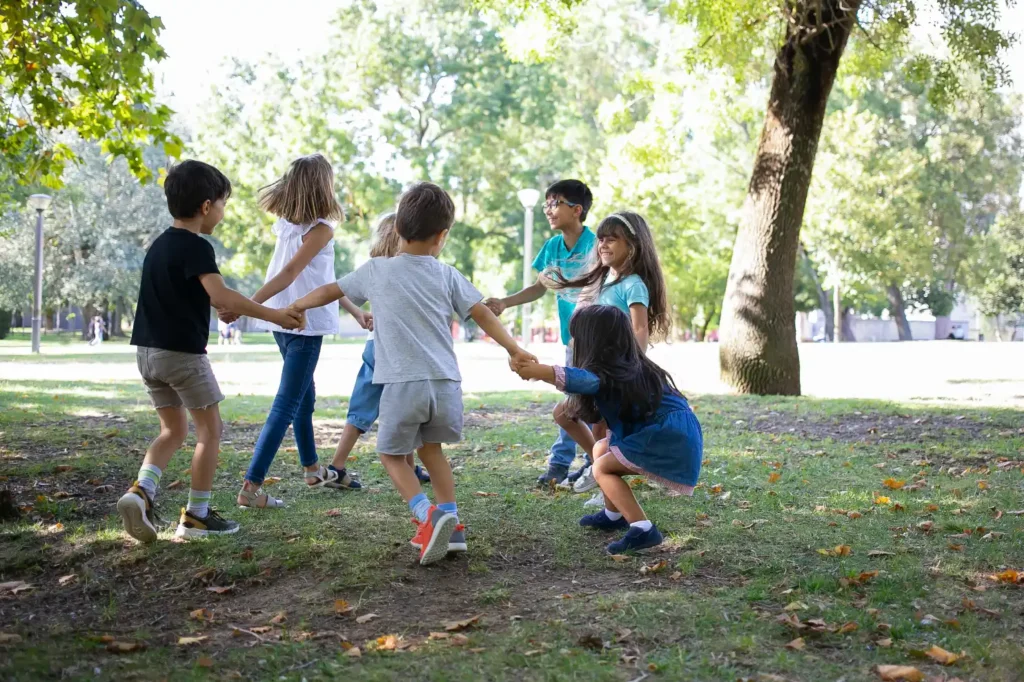
Why Children Learn Better Through Play
Children learn through play by exploring their surroundings, trying things out, solving small problems, and interacting with other people.
Play gives them a chance to practise language, movement, social skills, emotional control, and independent thinking in ways that feel natural to them.
Everyday activities, from building with blocks to pretending to run a restaurant, can become meaningful learning experiences.
Why “Play” Is Actually Serious Learning
Play is one of the main ways young children make sense of the world around them. They learn by trying things, seeing what happens, and changing what they do based on the result.
Play also gives children room to make decisions. They can choose what to do, change the rules, take an idea in a different direction, or start again when something does not work. These experiences build knowledge alongside skills such as problem-solving, communication, self-control, and persistence.
The learning can be quite deep even when the activity itself looks simple.
Unstructured Free Play
Unstructured free play is play where the child decides what to do, how to do it, and when to move on.
Because the child is making the decisions, they have to come up with ideas and work out problems along the way. They might change the rules, try a different approach, or invent a new game when their first idea does not work.
Through this, children get to practice making choices without an adult constantly telling them what to do.
Guided or Structured Play
Guided play is the opposite, as it has a little more direction. You may set up an activity or introduce a simple goal, while the child still gets room to explore.
Some examples of guided play are sorting blocks by colour, completing a simple puzzle, or playing a basic board game are good examples. The activity gives the child something to work towards, but they still have to think, try, and make decisions along the way.
This type of play can introduce early maths, language, memory, attention, and rule-following.
Both plays can teach valuable skills. Free play gives children more control over the experience, and guided play adds a little direction around what they are exploring.
Some examples of guided play are sorting blocks by colour, completing a simple puzzle, or playing a basic board game are good examples. This type of play can introduce early maths, language, memory, attention, and rule-following.
Why Does Play Work So Well for Young Children?
Young children learn through hands-on and (most of the time) physical experience. They need opportunities to try an idea and work out what to do next.
Play naturally creates those opportunities because children are engaged in something they have chosen or find interesting. They can repeat the same action until it makes sense to them.
That active involvement also makes learning easier to connect to experience. For example, a child who regularly uses pretend play to tell stories has already had practice putting ideas into words and responding to another person’s perspective.
As parents, we don’t need to turn every play into a lesson.
Parents can provide the time, space, and materials, then let the child do much of the thinking. Let them have fun, and the learning develops through the experience itself.
5 Skills Kids Build Through Play
When children play, most of the time it might involve movement, language, problem-solving, and social interaction all at once. What children practice will also depend on what they are playing, who they are playing with, and how much freedom they have.
Some children may spend a lot of time building and making things. Others may prefer pretend play, physical games, drawing, or playing with other children. Each kind of play gives them different opportunities to practice and develop.
-
Thinking and Problem-Solving
Play gives children many chances to work things out for themselves.
They may have an idea about how something should work and try it. They can then change what they are doing and try again. With repeated experiences like this, children begin to understand that problems can have different solutions and that getting something wrong is part of figuring it out.
This also gives children practice in thinking ahead. They start to consider what might happen before they act, especially as the games and activities they choose become more complicated.
-
Language and Communication
Children use language throughout play, even when language is not the focus of the activity.
They talk to themselves, explain what they are doing, give instructions, make up stories, ask questions, and work out ideas with other people. Pretend play can be rich in this way because children use language to create situations that do not exist in front of them.
When children play with others, they also have to listen and respond. They learn that communication is a two-way process, and that other people may have their own ideas about what should happen next.
-
Social and Emotional Development
Playing with other people gives children opportunities to learn how relationships work.
They have to share space and materials, take turns, deal with different opinions, and find ways to continue playing when someone disagrees with them.
These experiences can be frustrating, especially for younger children, but they are also part of learning to manage emotions around other people.
Pretend play gives children another way to explore social situations. They can take on different roles, act out familiar experiences, and experiment with how people might respond in different situations.
-
Physical Coordination
Movement is a natural part of play for many children, and it gives them time to become more comfortable using their bodies.
Larger movements help children develop balance and coordination, while smaller movements strengthen the control of their hands and fingers.
These abilities develop gradually through practice. Children often repeat movements because they enjoy them, without thinking about the physical skill they are building along the way.
-
Focus, Self-Control, and Independent Thinking
Play also gives children practice managing themselves.
A child may need to stay focused on something they are building, remember the rules of a game, wait for another person’s turn, or keep trying after something goes wrong.
These experiences gradually build the ability to control attention, actions, and emotions.
Children also get to make many small decisions during play. They decide what to do, which idea to follow, and when to change direction. Having this kind of control gives them experience making choices and seeing what happens as a result.
These skills are often grouped under executive functioning, which includes things like attention, working memory, self-control, and flexible thinking.
Children develop these abilities over time, and play gives them plenty of everyday opportunities to practice them.
How Parents Can Guide Play Without Taking Over
A few small changes in how you join a child’s play can give them more room to think.
Watch before stepping in. Give your child a chance to work out what they are trying to do. It is tempting to immediately jump in with a suggestion when something looks difficult, but waiting can give them a chance to find their own solution.
Add language to what they are doing. You can describe an action, introduce a new word, or respond to what your child has said. This gives them language they can use without interrupting the activity.
Ask questions that leave room for different answers. Tap deeper into your child’s imagination by asking them what they think might happen or what they could try next during play. This keeps the thinking with the child.
Give them choices. Let your child decide between materials, roles, or ways of approaching the activity when there is room to do so. Small choices give them practice making decisions.
Let them struggle a little. The best lesson is sometimes learned the hard way. And it’s good to let children experience the same. When they seem to be stuck, you can observe how they approach the problem and not offer them the solution right away. Some frustration is part of figuring things out. Stay nearby, but give them time to try before stepping in.
How Parents Can Support Learning Through Play
Parents do not need to plan a lesson every time their child plays. Creating enough time and space for play, and giving children things they can explore in different ways, already gives them plenty to work with.
Let Your Child Take the Lead
It can be tempting to show a child how a toy is “supposed” to be used, especially when an activity has an obvious purpose. Leaving some room for them to decide what to do can lead to much richer play.
A box can become anything they want it to be. A game can change halfway through. A story can take an unexpected turn.
When children make these decisions themselves, they get to practise coming up with ideas and following them through. You can join in when they invite you, but you do not need to direct every part of the play.
Keep the Materials Simple
Simple, open-ended materials give them room to decide what they want to make or do. Simple games can work in much the same way, especially when they give children opportunities to make choices, solve problems, or think about money.
Simple, open-ended materials give them room to decide what they want to make or do. Blocks, cardboard boxes, crayons, fabric, containers, and playdough can all be used in different ways as their ideas change.
Toys with one fixed purpose can still be enjoyable, but open-ended materials often leave more of the thinking to the child.
Respond to What Your Child Is Doing
Children often invite adults into their play without saying so directly. They might point something out, make a sound, show you what they have built, or tell you part of a story.
Responding to these moments gives them a chance to practise communication through back-and-forth interaction. You can respond to what they say, add a word they may not know yet, or simply follow the idea they are already exploring.
These small exchanges are part of how children learn to communicate with other people.
Give Them Space to Make a Mess
Some kinds of play are naturally messy. Water gets spilled. Paint gets on hands. Sand ends up somewhere it was not meant to be.
Having a space where this is allowed makes it easier for children to explore without constantly being told to stop or be careful.
It does not need to be a large space. Even a small area where certain materials are allowed can give children more freedom to experiment.
Give Repetition a Chance
Children often want to do the same thing again and again. They may tell the same story, build the same structure, or repeat an action long after an adult would have lost interest.
There is no need to rush them onto something new. Repetition gives children time to become familiar with an idea and notice things they may have missed the first time.
As they become more confident, they may start changing small parts of the activity themselves. That is often where new learning begins to appear.
How to Tell If Play Is Helping a Child Learn
You may notice changes in the way your child plays as they become more confident and capable. They may stay with an activity for longer, come up with different ways to solve a problem, or add more detail to games they have played before.
A few things you might notice over time include:
- Longer attention: Your child stays engaged with activities they have chosen instead of moving on quickly.
- More flexible problem-solving: They try another approach when their first idea does not work.
- Richer communication: They use more words, gestures, drawings, or stories to express what they are thinking.
- More complex play: Their games develop more characters, rules, or steps as their ideas become more detailed.
- Greater cooperation: They become better at sharing ideas, negotiating roles, and continuing to play with others.
- More confidence: They are willing to take on a challenge, try again, or explain how they worked something out.
These changes tend to happen gradually, and naturally. There is no single way a child should play, and there is no need to measure every activity against a particular developmental checklist. Giving children varied experiences and enough time to explore them lets their play change naturally as they grow.
Play can be a simple way to introduce new ideas, from problem-solving and communication to money and entrepreneurship. If you want to take this kind of learning further for your children, explore the MoneyKids programmes for more hands-on learning experiences.